Fabrics explained: jersey, viscose, jacquard, chenille, bouclé and more
Jersey, viscose, jacquard, chenille, bouclé: you will come across many fabric names in our product descriptions. They tell you how a garment drapes, how it feels and how it looks. In this guide we explain the most important terms in plain language and show you a style from our collection for each fabric, so you can recognise it.
Fibre or construction? The most important difference
Many fabric names get mixed up because they describe different things. Some terms name the fibre, i.e. the raw material, such as viscose, cotton, linen, wool or polyester. Others describe the construction, i.e. how the yarn becomes a fabric: jersey is knitted, jacquard has a pattern worked into it. Others again refer to the yarn or the surface, such as chenille, bouclé or crinkle. That is why a fabric can be jersey and viscose at the same time. The exact composition of each style is given on its product page.
Jersey: stretchy and softly draping
Jersey is a knitted fabric. It is not woven but knitted, which is why it stretches. It drapes softly, feels pleasant on the skin and gives with every movement. Jersey can be made of cotton, viscose or polyester.
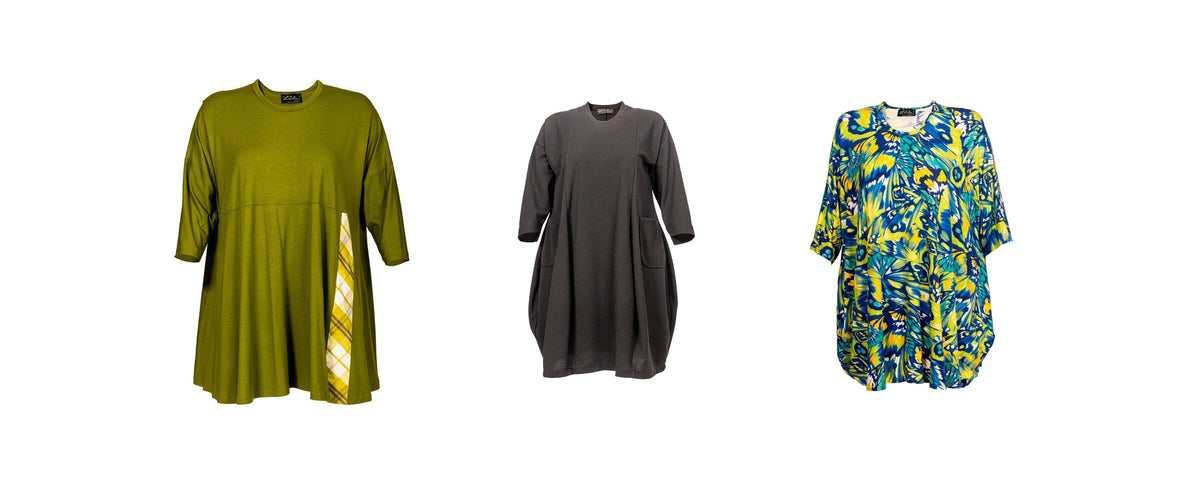
One example is the blue and black striped jersey tunic made of flowing viscose jersey with 95 % viscose and 5 % elastane. It is cut in an A-line, has long sleeves and is around 85 cm long.
Viscose: flowing and pleasant on the skin
Viscose is a fibre made from cellulose, usually obtained from wood. So it is neither a purely natural fibre like cotton nor a synthetic fibre like polyester. Viscose drapes fluidly and feels soft, which is why it is popular for tunics, blouses and dresses. Material labels sometimes say rayon: this is a name often used for viscose in English-speaking countries.
The viscose tunic with two pockets is made of 100 % viscose. It has an A-line, a V-neck and 3/4 sleeves and is around 90 cm long. When viscose is woven as satin, it gets a smooth surface with a subtle sheen, as with our viscose satin tunics.
Jacquard: the pattern is part of the fabric
With jacquard, the pattern is not printed on but worked into the fabric during weaving or knitting. The name goes back to the French weaver Joseph-Marie Jacquard, who developed a loom for such patterns. This makes jacquard fabrics more textured and often a little firmer than plain jersey.
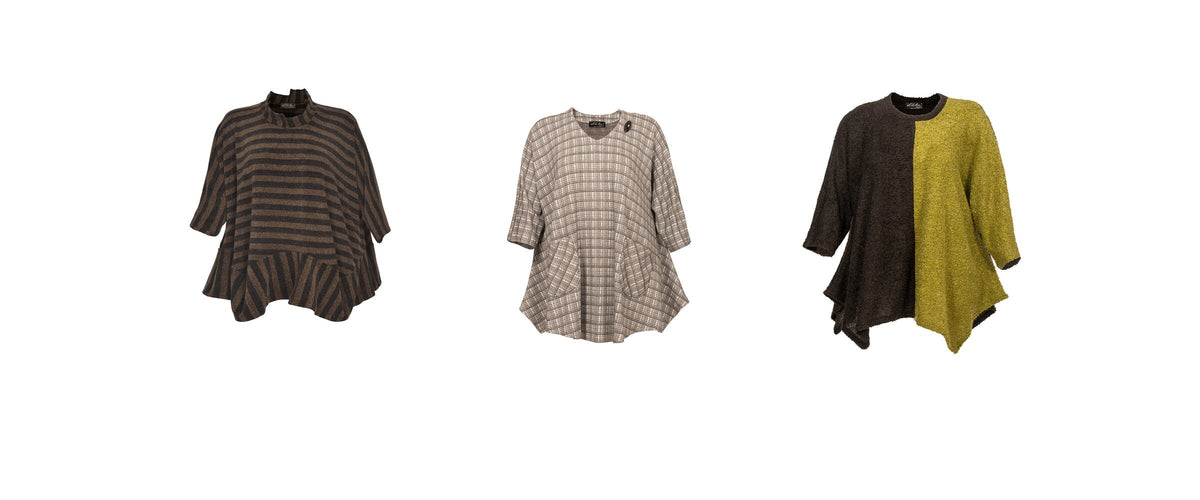
The grey and white checked jacquard tunic shows this well: the check pattern is part of the textured jacquard fabric. It is made of 53 % viscose and 45 % polyester, has a V-neck with a black button and two pockets and is around 93 cm long.
What is jacquard jersey?
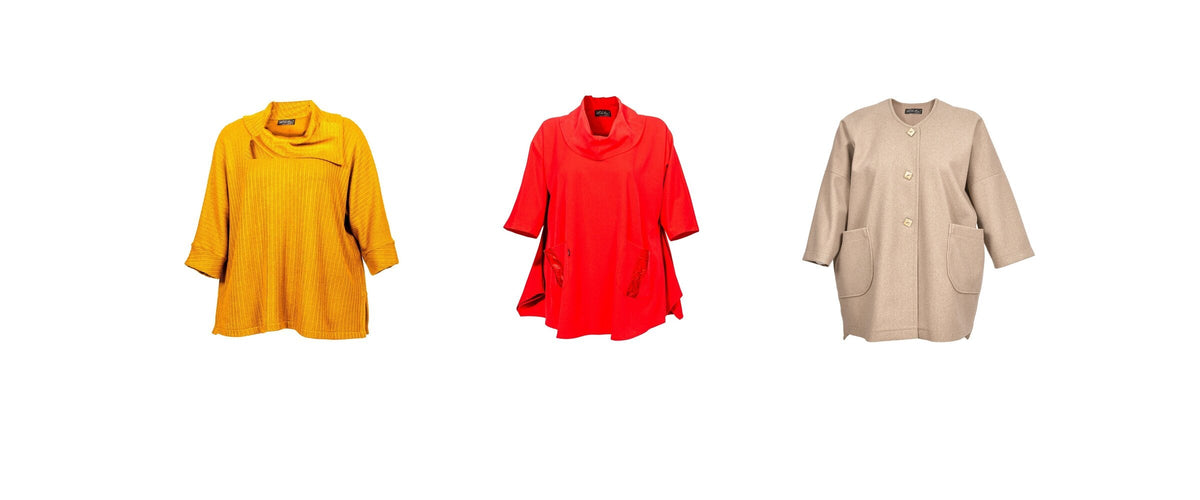
Jacquard jersey, also called jacquard knit, combines both: a stretchy knitted fabric with a knitted-in pattern. It gives more than a woven jacquard and still has a visible texture. One example is the berry-coloured jacquard tunic with cable pattern made of jacquard knit. It has a large, flowing collar, long sleeves and two pockets and is around 89 cm long.
Crinkle and crash: an intentional creased texture
Crinkle and crash describe fabrics with a crimped, slightly creased surface. The creases are intentional and part of the look. Such fabrics look casual and light.
The khaki and white crash tunic has a light crash texture and is made of 95 % viscose and 5 % elastane. It is cut in an A-line, has a V-neck, short sleeves and two pockets and is around 97 cm long.
Chenille: velvety soft
Chenille is the French word for caterpillar. The name describes the yarn: short fibres stick out all around it, similar to a furry caterpillar. This creates a fabric with a soft, velvety surface.
One example is the chenille jumper in khaki with black stripes made of soft chenille knit. It is made of 80 % polyester and 20 % viscose, cut in an A-line, has an unusual collar and is around 88 cm long.
Bouclé: yarn with small loops
Bouclé comes from French and means curled. The yarn has small loops and knots that give the fabric a lively, slightly nubbly surface. Bouclé is best known from jackets and coats, but it also comes as a knit.
The black and green bouclé jumper has a flounce hem, a round neckline and long sleeves and is around 85 cm long. It is made of 76 % polyacrylic, 13 % wool and 11 % polyester.
Merino touch: a term for the feel
Merino touch describes how a fabric feels: soft and fine, similar to merino wool. What it is actually made of is shown in the material details. The brown merino touch jersey jumper is made of 50 % viscose, 45 % polyester and 5 % elastane, so it contains no merino wool. It has a high collar with four decorative taffeta stripes, long sleeves and a pointed hem and is around 90 cm long.
Which fabric for which purpose?
- Flowing and light: viscose, viscose jersey, crinkle and crash.
- With a visible texture: jacquard and bouclé.
- Soft and cosy: chenille and merino touch.
You can read more about combining such fabrics in layers in our guide to the layered look in winter. You will find all styles in our tunic and jumper collections. For care, please always follow the label in the garment.
Which size fits?
Our styles come in two sizes: size 1 for German dress sizes 44 to 52 (hip circumference 120 to 146 cm), size 2 for 54 to 60 (hip circumference 146 to 160 cm). The exact measurements are in our size chart.
Frequently asked questions about fabrics
What is jacquard jersey?
A stretchy knitted fabric into which a pattern is worked during knitting. It combines the comfort of jersey with the texture of jacquard.
What is bouclé?
A fabric made from yarn with small loops and knots. It has a lively, slightly nubbly surface.
What is chenille?
A fabric made from yarn with fibres sticking out all around it. This makes it feel velvety and soft.
Is merino touch merino wool?
Not necessarily. Merino touch describes the soft feel. For our merino touch styles, the material details list viscose, polyester and elastane.